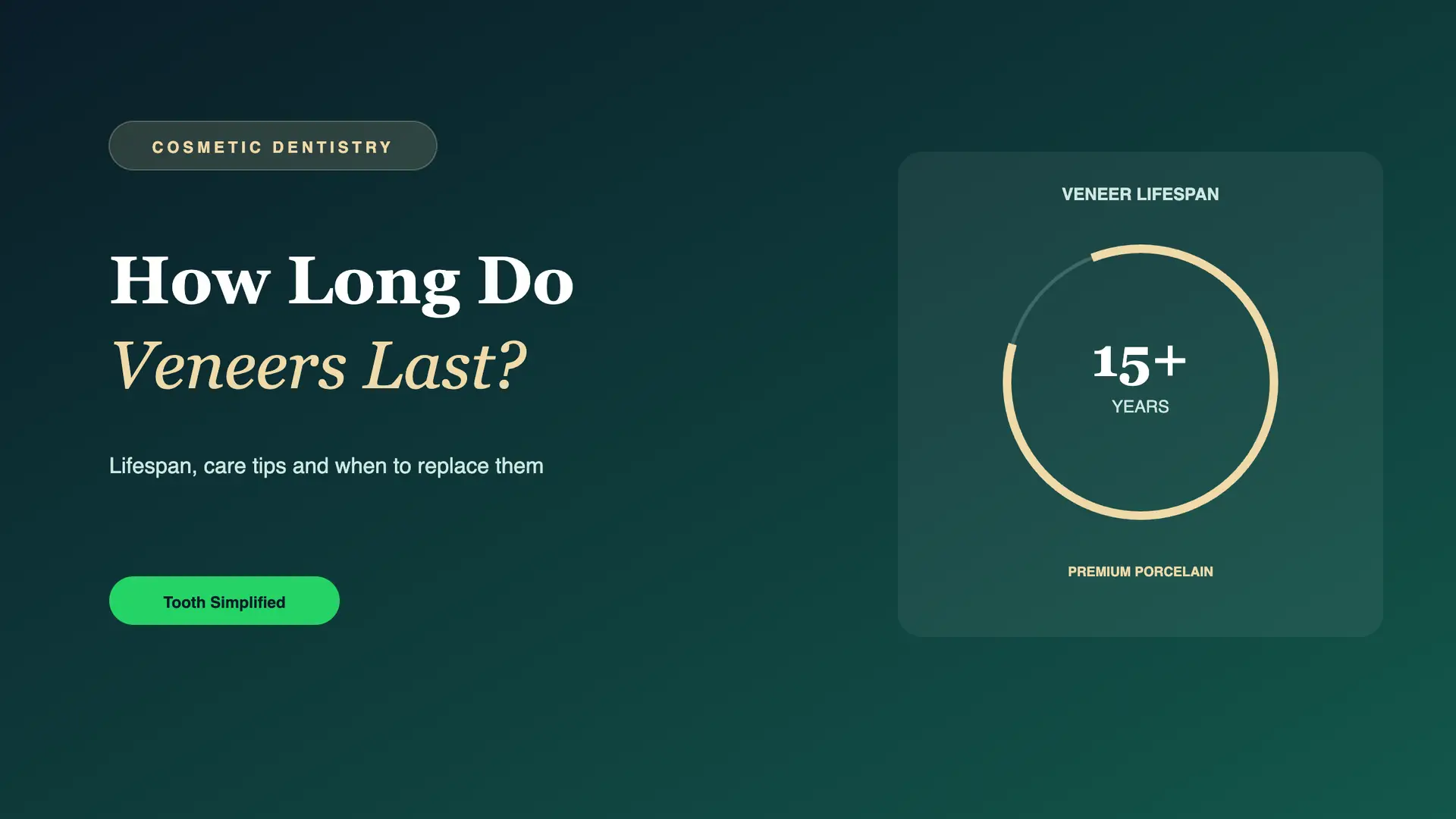
Porcelain veneers typically last 10–15 years, with many lasting 20+ years with excellent care. Composite veneers last 5–8 years. Lifespan depends on the material, the dentist’s skill, your oral hygiene and your habits — especially nighttime grinding (bruxism), biting hard objects, and acid-heavy diets. Individual veneers can be replaced when worn, so you’re not redoing the entire smile at once.
“How long do veneers last?” is the single most-asked question before any veneer treatment — and it deserves a clear, honest answer. Veneers are a serious cosmetic investment, so understanding their realistic lifespan, what shortens it, and how to maximise it is essential. Here’s the complete answer, broken down by veneer type, lifestyle and care.
Veneer Lifespan by Type
Not all veneers are equal — the material has the single biggest impact on how long they last:
| Veneer Type | Typical Lifespan | Notes |
|---|---|---|
| Porcelain (traditional) | 10–15 years | The industry standard. Very durable, stain-resistant. |
| Porcelain (premium e.max) | 15–20+ years | High-end pressed ceramic. Strongest and most aesthetic. |
| Composite | 5–8 years | Same material as white fillings. Can chip and stain over time. |
| Lumineers (no-prep) | 10–20 years | Ultra-thin porcelain bonded over existing teeth. |
| Zirconia veneers | 15–20+ years | Very strong but slightly less translucent. |
In a recent long-term clinical study published on PubMed, porcelain veneers showed a 91% survival rate at 10 years and 73% at 20 years — meaning most patients keep their original veneers for well over a decade.
Factors That Affect How Long Veneers Last
1. Your Oral Hygiene
Veneers themselves don’t decay, but the tooth underneath and the gum line around them can. Poor brushing or flossing leads to gum recession, which exposes the veneer margin and can cause it to fail prematurely. Twice-daily brushing and daily flossing are non-negotiable.
2. Nighttime Teeth Grinding (Bruxism)
Grinding is the #1 cause of veneer failure. The repetitive pressure cracks porcelain over years. If you grind your teeth, a custom night guard is essential — not optional.
3. Diet & Habits
Biting hard objects (ice, pens, fingernails, bottle caps) chips veneers. Acidic foods (lemon, vinegar, fizzy drinks) erode the bonding cement over time. Highly pigmented drinks (red wine, coffee, dark tea) can dull composite veneers faster than porcelain ones.
4. Initial Bonding Quality
A poorly bonded veneer will fail within 1–2 years. A well-bonded veneer placed by an experienced cosmetic dentist commonly lasts 15+ years. The dental cement, the etching protocol and the bite adjustment all matter. This is why dentist selection is as important as the porcelain itself.
5. Regular Dental Check-ups
Six-monthly check-ups catch small problems — a tiny chip, a margin gap, gum recession — before they become veneer-ending. Skipping check-ups can cut veneer lifespan in half.
Signs Your Veneers Need Replacing
Veneers don’t need to be replaced at a set date — you replace them when one or more of these things happen:
- Visible chip or crack on the veneer itself
- The veneer feels loose or moves when you press it
- Dark line at the gum margin (suggests gum recession or de-bonding)
- The colour has dulled compared to neighbouring teeth
- You feel rough edges on the tongue side
- Sensitivity to hot or cold coming from the veneered tooth
- Decay around the edge (visible to your dentist)
How to Make Your Veneers Last Longer
Want to be the patient whose veneers still look fresh 20 years later? Here’s the playbook:
- Wear a night guard if you grind or clench — even occasionally.
- Brush twice daily with a soft-bristled toothbrush and non-abrasive paste.
- Floss every day, especially around the gum line and between veneered teeth.
- Avoid biting hard objects — ice, pen caps, fingernails, hard candy, popcorn kernels.
- Limit acidic and staining foods or rinse with water after consuming them.
- Don’t use teeth as tools (opening packaging, cutting threads).
- Visit your dentist every 6 months for a check-up and professional polish.
- Quit smoking — tobacco discolours the bonding cement around veneer margins.
- Manage acid reflux if present — stomach acid erodes the cement.
- Wear a sports mouthguard for contact sports.
What Happens When You Replace a Veneer?
Replacing one veneer is similar to placing the original, but the tooth is already prepped — so it’s usually quicker:
- The old veneer is gently removed.
- The tooth surface is cleaned and re-prepped if needed.
- A digital scan or impression is taken.
- The new veneer is fabricated (5–14 days, often faster in India).
- A temporary veneer covers the tooth while you wait.
- The new veneer is bonded permanently.
Replacing a single veneer is significantly cheaper than the original set — you only pay for one veneer, not the full smile redesign.
Cost of Replacing Veneers
Veneer replacement costs the same as a new veneer of the same material. In India that’s typically ₹8,000–₹25,000 per tooth for porcelain, compared to $680–$1,600 in the UK or $900–$2,500 in the US. Many UK and US patients who originally had veneers placed at home choose to fly to India for replacements — the saving on 6–8 teeth easily pays for the entire trip.
Veneer Lifespan: The Honest Bottom Line
Properly placed porcelain veneers in a healthy mouth, with good hygiene and no severe grinding, will most likely last 12–18 years. Some patients keep them for 25+ years. Composite veneers will last 5–8 years before needing a touch-up or replacement. The biggest predictor of longevity isn’t the brand of porcelain — it’s the dentist’s skill in placing them and your own commitment to oral hygiene and night guard use.
Thinking about veneers — or replacing old ones?
Get a free consultation, photos of recent veneer cases and a transparent quote in your currency. Many international patients save 70–80% by combining treatment with a short India trip.
“The doctor explained my braces treatment — procedure, duration and results — in full detail.”
Orthodontic patient
“Got my root canal and crown done here — comfortable the whole way through.”
Root canal patient
“My tooth-coloured filling looks so natural you can hardly notice it.”
Restorative patient
Weighing both? how veneers compare with crowns on cost and lifespan.
Common worry: do veneers ruin your natural teeth?.
Getting it done in Delhi-NCR: smile makeover treatment at our Delhi-NCR clinic.
Frequently Asked Questions
How long do veneers last on average?
Porcelain veneers typically last 10–15 years, with many lasting 20+ years with excellent oral hygiene and night-guard use. Composite veneers last 5–8 years. Lifespan depends heavily on the material, the dentist’s skill, your hygiene habits, and whether you grind your teeth at night.
Do veneers last forever?
No — no dental restoration lasts forever. The longest-lasting porcelain veneers from premium brands like e.max can last 20+ years, but eventually wear, chip or develop margin issues that require replacement. Composite veneers have a shorter 5–8 year lifespan and need replacement sooner.
What is the most common reason veneers fail?
Nighttime teeth grinding (bruxism) is the #1 cause of veneer failure. The repetitive pressure cracks porcelain over months and years. Wearing a custom night guard is the single most important step you can take to protect your veneers. The next biggest cause is poor gum care leading to recession around the veneer margin.
Can a single veneer be replaced without redoing the whole smile?
Yes. Individual veneers are replaced one at a time. Your dentist will gently remove the failing veneer, take a fresh impression and bond a new one matched to the surrounding teeth. You don’t need to redo the entire smile.
Are veneers permanent?
Veneers themselves are not permanent — they wear and eventually need replacement. However, the procedure is permanent in the sense that a thin layer of enamel is removed from the tooth during preparation, and that enamel cannot grow back. You will always need a veneer (or crown) on the prepped tooth.
Do veneers in India last as long as those in the UK or US?
Yes — when placed at an experienced clinic using premium ceramic brands (e.max, Lumineers, Da Vinci), Indian veneers last 10–15+ years, identical to those placed in the UK or US. The difference is in the cost (60–80% cheaper in India), not the materials. The longevity depends on the dentist’s skill and your aftercare, not the country.
Will veneers stain over time?
Porcelain veneers are highly stain-resistant and rarely discolour. The bonding cement at the gum margin can darken slightly over many years — especially with smoking or heavy coffee/tea consumption. Composite veneers stain more readily and may dull noticeably after 3–5 years.
How much does it cost to replace veneers in India?
Replacing porcelain veneers costs the same as new ones — ₹8,000–₹25,000 per tooth at our Vaishali clinic, depending on the material. A full upper smile replacement of 8 veneers is typically ₹80,000–₹1,80,000 (≈$800–$1,800) — far less than UK or US replacement costs.
Related Reading
Related guide: complete cosmetic dentistry guide.
Do veneers ruin your teeth? Separating the myth from fact
A small amount of enamel is removed to fit traditional porcelain veneers, and this step is permanent – which is where the “veneers ruin your teeth” concern comes from. In reality, when veneers are placed correctly by an experienced dentist, the underlying tooth stays healthy and protected by the veneer itself. Problems arise from over-aggressive enamel removal, poor bonding technique, or skipping the exam needed to check if a tooth is a good candidate – not from veneers themselves. Ultra-thin/no-prep veneer options exist for patients who want to avoid enamel removal entirely, though not every tooth qualifies; this is confirmed during your doctor exam.
Veneer maintenance: how to make them last longer
- how digital smile design plans veneers — Preview and approve the shape before any enamel is removed
- Avoid biting hard objects (ice, pen caps, opening packets with your teeth) – this is the most common cause of chipped veneers.
- Wear a night guard if you grind your teeth; grinding is the leading cause of early veneer failure.
- Use a soft-bristled brush and non-abrasive toothpaste – abrasive whitening toothpaste can dull the porcelain surface over time.
- Keep up 6-monthly dental check-ups so any small chip or margin issue is caught early, before it becomes a bigger repair.
- Limit staining drinks (coffee, red wine, tea) in the first 48 hours after placement while the bonding cement fully cures.
Veneers vs crowns: when is a crown the better choice?
Veneers are ideal for cosmetic changes (shape, color, minor gaps) on teeth with healthy structure underneath. A crown is the better choice when the tooth has significant decay, a large existing filling, a root canal treatment, or a crack that affects its strength – situations where a thin veneer shell wouldn’t provide enough support. Dr. Bandhavi, MDS (Endodontics) will confirm which option fits your specific tooth during the exam; this is not something that can be decided from photos alone.
Explore treatments at Tooth Simplified
Led by Dr. Bandhavi, MDS (Endodontics) — painless, affordable care for local Delhi-NCR patients and international visitors.
Guides you might find useful
- Dental implant cost in Ghaziabad
- All-on-4 vs All-on-6 implants
- India vs Thailand vs Hungary for implants
- Does scaling weaken teeth? (the myth)
- Dental tourism from Canada
- Dental tourism in India — full FAQ
Leave a Reply